Hearing loop and assistive listening systems in Uganda
A hearing loop, also called an induction loop, audio frequency induction loop (AFILS), T-loop or assistive listening system, sends sound straight into hearing aids and cochlear implants. The listener switches their hearing device to the T (telecoil) setting and hears the speaker clearly, without the background noise of the room.
We don’t sell hearing aids. We complement them. A loop system makes a building accessible to people who already use hearing aids, and it is one of the most cost effective ways to do it.
How a hearing loop works
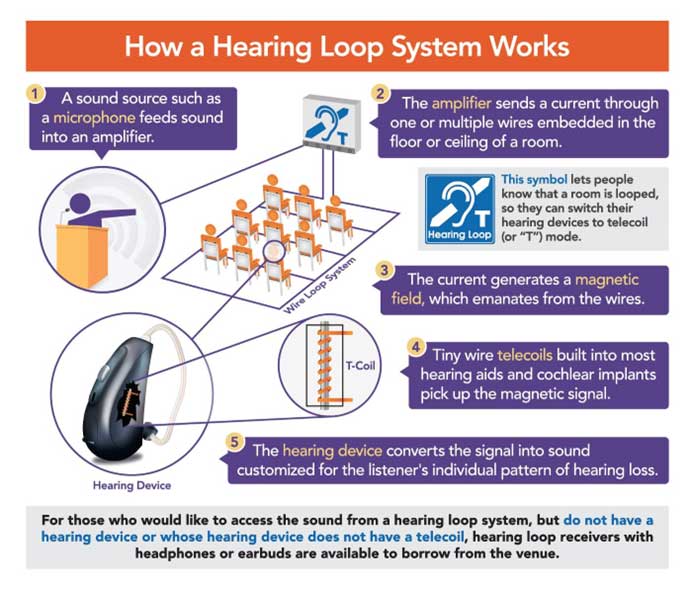
- A microphone or the sound system feeds the loop amplifier (loop driver)
- The amplifier drives a current through a loop cable laid around or under the listening area
- The current creates a magnetic field across the area
- The telecoil in the hearing aid picks up the signal and turns it into clear sound for the listener
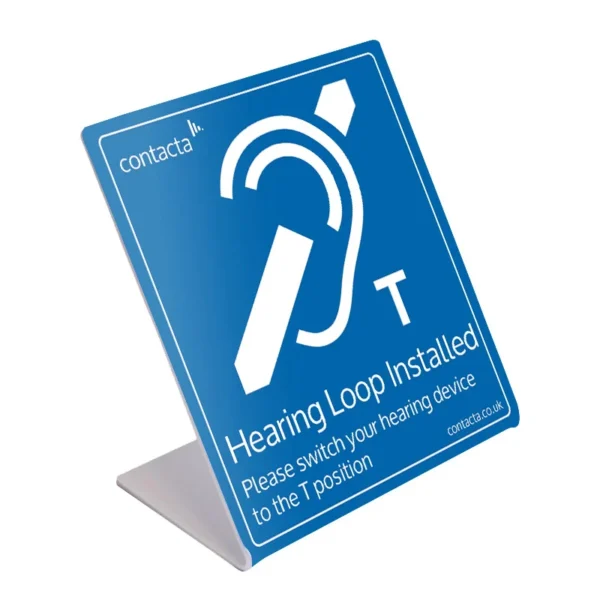
- A loop sign shows people the area is looped, so they know to switch to T
Types of loop systems
- Counter loops (one-to-one): reception desks, bank and hospital counters, ticket windows and pharmacies
- Portable loops: for meeting tables and places where a fixed loop is not practical
- Integrated loops: built into intercoms, help points and self-service machines
- Room and large area loops: meeting rooms, conference halls, classrooms, churches and auditoriums, using perimeter or phased array layouts for even coverage
Auracast: assistive listening from the sound system
We now also offer Lithe Audio Bluetooth Auracast ceiling speakers. Auracast is the new Bluetooth broadcast audio standard: the sound system can broadcast audio that compatible hearing aids, earbuds and phones receive directly. It is the latest way to add assistive listening to a space, straight from the speakers.
Where loop systems are needed
Banks, hospitals and clinics, government offices, courts, hotels, schools and universities, churches and mosques, conference centres, theatres, transport and any public counter or meeting space. Many international building standards, such as IEC 60118-4 for loop performance, expect assistive listening in these spaces.
How we work
- Site survey: the area, the sound source, metal in the building and background electrical noise
- Design of the loop type, layout and driver to meet IEC 60118-4 performance
- Installation by our trained resellers and integrators, supervised by us
- Testing with a field strength meter, signage and staff training
Download the guide
Download the Guide to Hearing Loops (PDF, 1.6 MB)
A guide from Contacta: what hearing loops are, the types, installation, maintenance and standards.
Related: Conference Systems | PA and Voice Alarm | Ceiling Speakers
Contact us to plan a loop system or assistive listening for your building, or find a reseller.
BRANDS